Tour Operator Risk Management: What to Do When Travel Disruptions Happen

What To Do
When Travel Disruptions Happen
Travel disruptions are inevitable. Losing guest trust does not have to be.
Risk management is not just protection. It is part of sustainable tour business growth.
Tour operator risk management has evolved, and working with a tourism SEO agency for tour operators helps ensure your website, content, and communication systems stay clear, visible, and trustworthy even during disruptions.
When disruptions happen, the strongest operators are not the ones who avoid every issue. They are the ones who communicate clearly, adapt quickly, and maintain a booking journey that still feels stable.
This guide explains how to build a practical, modern approach to risk management that protects both operations and demand.
Why Risk Management Matters for Tour Operators Today
Disruptions affect more than schedules.
They impact:
- Guest confidence
- Reviews and reputation
- Future bookings
- Referral behavior
- Revenue stability
Travelers expect clarity and reassurance, especially during uncertain conditions.
If communication is slow or confusing, frustration increases. If expectations are managed well, even disrupted experiences can still lead to positive reviews.
Risk management supports:
- Stronger operations
- Better customer experience
- More consistent brand perception
This is not just about avoiding problems. It is about protecting the guest journey and maintaining trust.
This shift is closely tied to visibility, and understanding how tour operators can win at SEO and AI search ensures your brand shows up with clear, reassuring information when travelers are actively looking for answers during uncertain conditions.
The Types of Risks Tour Operators Need to Plan For
A complete tourism risk management plan should cover multiple categories.
Health and Safety Risks
These include:
- Guest injuries or incidents
- Weather exposure
- Environmental hazards
- Activity-specific risks
Preparation here reduces liability and improves guest confidence.
Legal and Regulatory Risks
Examples include:
- Permit requirements
- Local compliance rules
- Changing travel restrictions
- Documentation requirements
Operators must stay informed and adaptable.
Operational Risks
Operational issues are often the most common.
These include:
- Guide availability
- Transportation delays
- Supplier cancellations
- Equipment failure
- Technology outages
- Itinerary disruptions
These are the disruptions guests feel most directly.
Financial Risks
These include:
- High cancellation volume
- Refund pressure
- Seasonal demand shifts
- Margin compression during uncertain periods
Financial resilience is closely tied to operational and communication strategy.
What Travel Disruptions Actually Look Like in the Tour Industry
Travel disruption planning in tourism must stay grounded in reality.
Common scenarios include:
- Weather-related delays or cancellations
- Transportation breakdowns
- Supplier or partner issues
- Unsafe conditions due to visibility or environment
- Regional instability affecting traveler confidence
- Sudden shifts in booking behavior
Not every disruption is dramatic.
Many are small operational issues that escalate when communication is unclear.
Understanding these scenarios helps operators prepare without becoming reactive.
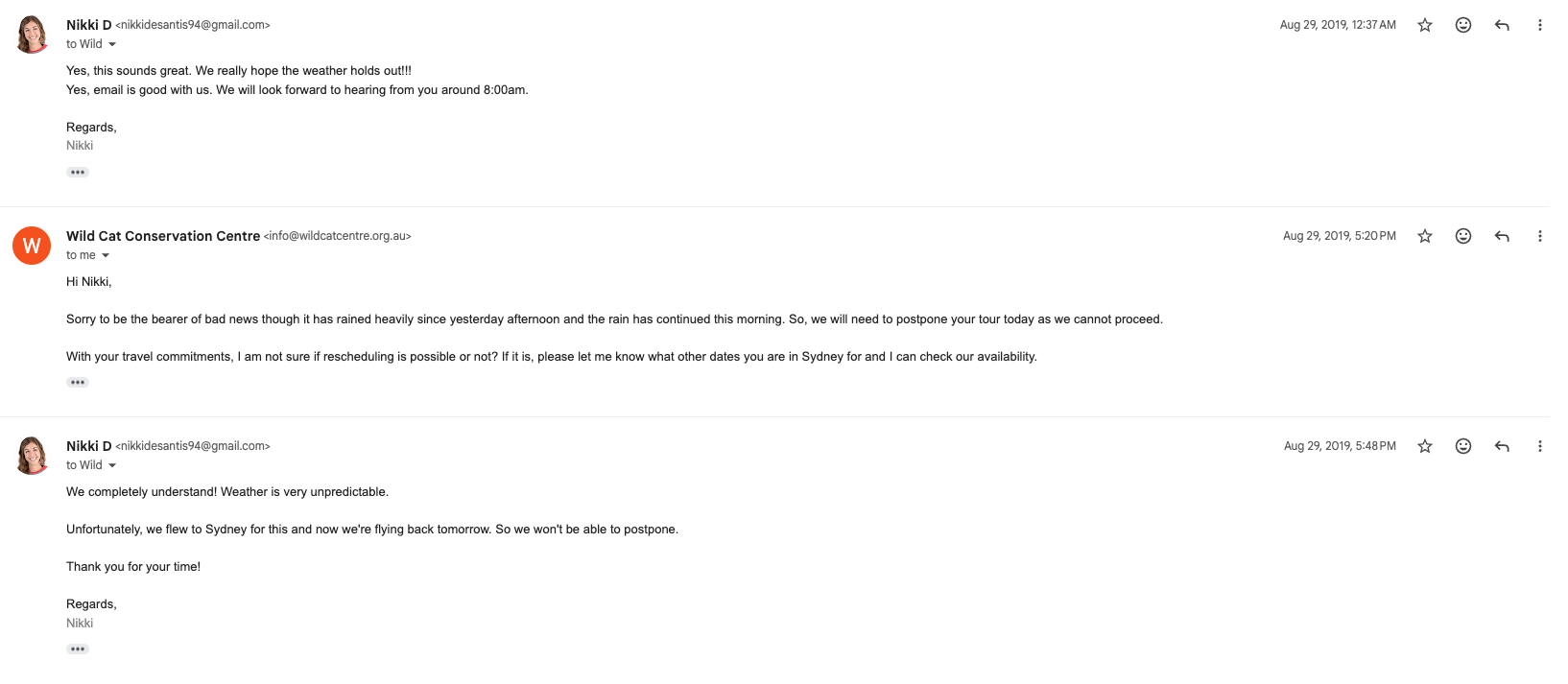
Below is an email Nikki (our Marketing Director) received while planning a tour with the Wild Cat Conservation Centre in Australia. Situations like this happen. What matters most is how communication is handled afterward.
How Tour Operators Can Build a Strong Risk Management Plan
A structured tour operator contingency plan reduces chaos and improves response speed.
Document Your Most Likely Disruption Scenarios
Identify issues based on:
- Destination
- Seasonality
- Tour type
- Past experiences
Focus on probability, not just worst-case scenarios.
Create a Clear Tour Operator Contingency Plan
Your plan should include:
- Internal response workflows
- Guest communication steps
- Partner coordination
- Rebooking or refund pathways
Clarity reduces hesitation when time matters.
Assign Roles Before Problems Happen
Define responsibilities clearly:
- Who communicates with guests
- Who adjusts bookings
- Who contacts partners
- Who manages support requests
When roles are unclear, response time slows.
Standardize Customer Messaging
Prepare templates for:
- Delay notifications
- Cancellation updates
- Itinerary changes
- Reassurance messaging
Consistent messaging reduces confusion and builds trust.
The Customer Experience Side of Risk Management
This is where most operators underestimate impact.
Travelers do not just remember the disruption. They remember how it was handled.
Clear communication:
- Reduces anxiety
- Improves cooperation
- Builds confidence
- Protects brand perception
If guests feel informed and supported, frustration decreases significantly.
Pre-trip expectation setting also improves resilience. When guests understand that conditions can change, they are more flexible.
A strong customer journey absorbs uncertainty.
If your communication flow feels inconsistent or reactive, improving it can immediately strengthen both experience and conversion.
A structured approach to
mapping the tourism buyer’s journey helps operators identify where uncertainty appears and strengthen communication at each stage of the guest experience.
Preventative Measures That Reduce Risk Before It Escalates
Prevention reduces pressure during disruptions.
Robust Health and Safety Policies
Clear procedures improve both safety and guest confidence.
Compliance With Legal and Regulatory Requirements
Staying compliant avoids unexpected operational interruptions.
Efficient Operational Procedures
Standardized workflows reduce errors and delays.
Strong Supplier and Partner Communication
Reliable coordination prevents cascading issues.
Better Booking and Intake Processes
Clear guest information reduces misunderstandings and last-minute complications.
Prevention is not about eliminating risk entirely. It is about reducing impact.
Why Digital Infrastructure Matters During Travel Disruptions
Digital systems play a critical role in modern crisis management in the tourism industry.
They enable:
- Real-time website updates
- Automated messaging
- Faster guest communication
- Clear booking flow adjustments
- Reduced support load
FAQ pages and pre-trip content can answer common concerns before guests reach out.
CRM systems and email automation help maintain communication at scale.
ResmarkWeb specializes in helping tour operators build stronger digital infrastructure through SEO, content strategy, paid media, and user experience optimization. In periods of uncertainty, that kind of digital clarity helps businesses stay visible, reassure travelers, and protect demand.
If your current systems struggle to communicate updates quickly, that gap becomes highly visible during disruptions.
Risk Management Is Also a Marketing Strategy
Trust drives bookings.
When travelers perceive a brand as organized and prepared, they feel more confident booking even during uncertain periods.
Strong communication:
- Improves conversion rates
- Reduces hesitation
- Builds long-term loyalty
SEO content can answer disruption-related questions before guests ask them.
Paid media and landing pages can reinforce reassurance messaging.
Email communication can maintain confidence throughout the journey.
Operators who communicate better often perform better.
Risk management is not separate from marketing. It is part of it.
Common Mistakes Tour Operators Make During Disruptions
Many issues come from avoidable mistakes.
These include:
✔️ Going silent when problems arise
✔️ Reacting too late
✔️ Providing unclear or inconsistent updates
✔️ Not training staff on guest communication
✔️ Treating disruption as only an operations issue
✔️ Lacking a clear update path on the website
These mistakes increase confusion and reduce trust. Preparation prevents them.
How to Stay Informed and Adapt Over Time
Risk management is not a one-time effort.
Operators should:
- Review past disruptions
- Identify what worked and what did not
- Update contingency plans regularly
- Gather guest feedback
- Improve communication systems
- Refine processes continuously
Resilience is built over time through iteration.
How ResmarkWeb Helps Tour Operators Build More Resilient Growth Systems
ResmarkWeb helps tour operators strengthen visibility, customer trust, and conversion through SEO, content strategy, paid media, and website optimization.
When travel disruptions happen, those systems matter even more.
A clear website, stronger messaging, search visibility, and a well-structured customer journey allow operators to:
- Communicate updates faster
- Reduce booking friction
- Maintain demand
- Build confidence during uncertainty
ResmarkWeb functions as a strategic growth partner for tourism businesses seeking predictable booking expansion. The agency develops cohesive marketing frameworks that integrate SEO, paid acquisition, analytics, and conversion optimization. Its mission is to help tour operators strengthen market presence and drive sustainable direct revenue growth.
Risk management becomes more effective when supported by strong digital systems.
Build a Stronger Tour Operator Risk Management Strategy
If you want to improve how your business handles disruptions, start with structure.
Focus on:
- Clear communication systems
- Strong booking and website experience
- Defined operational workflows
- Proactive guest messaging
If you need help evaluating your current setup, consider:
- Booking a strategy consultation
- Reviewing your customer journey
- Improving your website and communication systems
- Strengthening your digital resilience
Preparation creates confidence. Confidence drives bookings.
Frequently Asked Questions
What is tour operator risk management?
Tour operator risk management is the process of identifying, preparing for, and responding to disruptions that affect operations, guest experience, and bookings.
What should a tour operator contingency plan include?
It should include response workflows, guest communication steps, partner coordination, and clear rebooking or refund processes.
How can tour operators prepare for travel disruptions?
By documenting likely scenarios, creating structured plans, assigning roles, and preparing communication templates in advance.
Why is customer communication important during disruptions?
Clear communication reduces confusion, builds trust, and helps maintain a positive guest experience even when plans change.
How does risk management affect guest trust?
Well-managed disruptions increase confidence and improve brand perception, while poor communication can damage reputation and future demand.
What operational risks should tour operators plan for?
Common risks include weather delays, supplier issues, transportation problems, staffing challenges, and technology failures.
How can digital systems help during travel disruptions?
They enable faster communication, clearer updates, better booking management, and reduced operational pressure during uncertain conditions.
Travel & Tourism Marketing Blog