Big Creek Expeditions Case Study | ResmarkWeb
Big Creek Expeditions has been guiding guests on the Pigeon River since 2004. Founded by Jon Felderman, a guide since 1996 who traded his architect's drafting table for a paddle, Big Creek grew from a single-river operation into the Smokies' most trusted multi-adventure outfitter: whitewater rafting, ziplining, and horseback riding, spread across some of the most visited vacation geography in the Southeast.
With more than 3,500 five-star reviews across Google, Facebook, TripAdvisor, and Yelp, the reputation was never the issue. The opportunity was digital: build a website architecture that matched the breadth and quality of the on-river experience, captured the full scope of Smoky Mountain search traffic, and made it effortless for any family, from a first-timer with a nervous seven-year-old to a group of twenty, to find the right trip and book it with confidence.
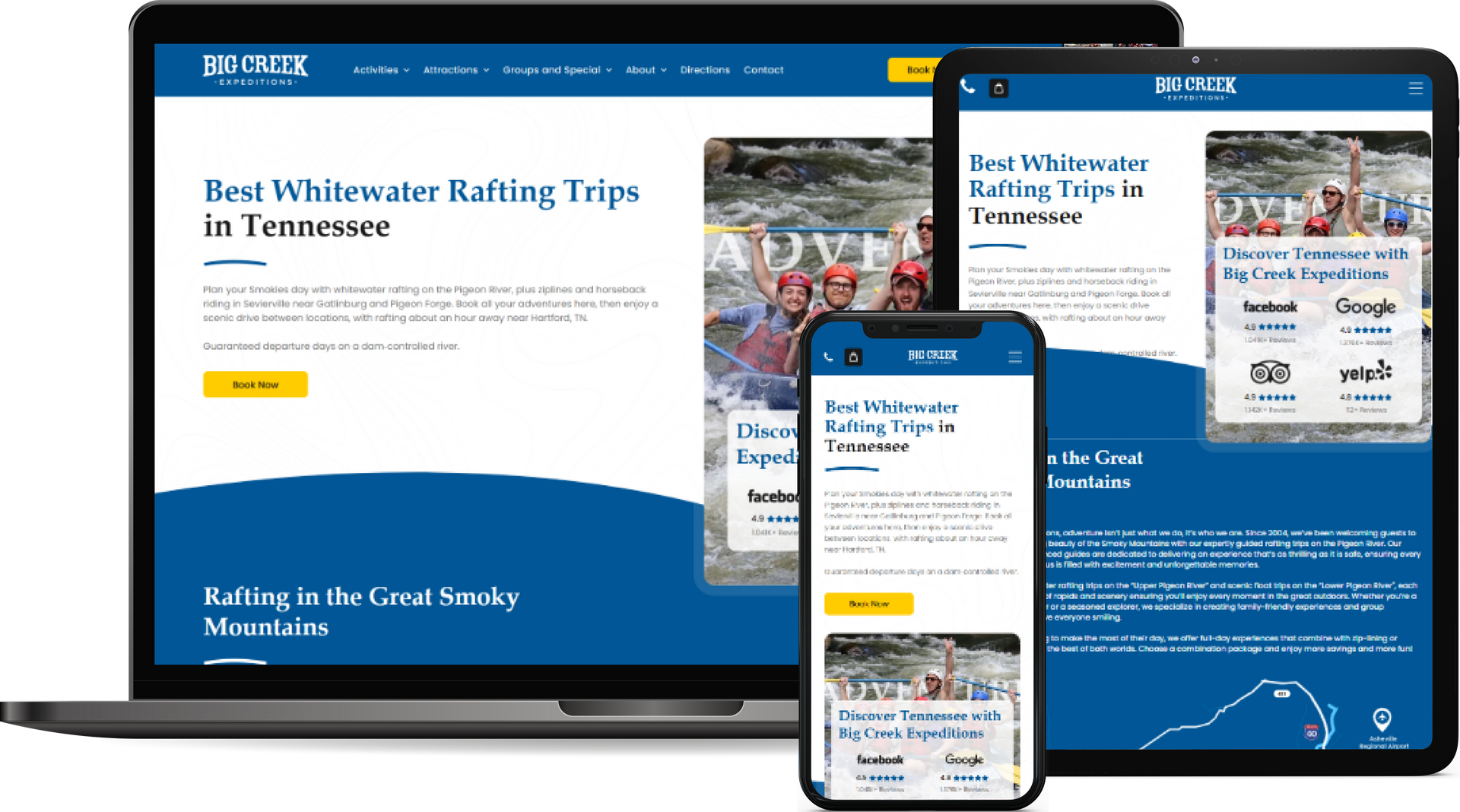
Highlights
📈 Full multi-activity SEO architecture spanning rafting, zipline, and horseback riding across four Smoky Mountain destinations
🚀 Expanded destination content targeting travelers arriving from Gatlinburg, Pigeon Forge, Sevierville, and Hartford (the four primary demand centers)
🌐 Trip differentiation by ability and age so every guest, from ages 3 to 80+, self-selects the right experience before they call
📊 Trust architecture built around 3,500+ reviews across four platforms, featuring real guest voices front and center
⭐ Same-day booking support and group infrastructure reducing friction for the walk-in traveler and the corporate retreat planner alike
The need
Big Creek's previous digital presence reflected a company that had earned its reputation on the water, not online. The site served existing customers well enough, but it wasn't working hard for the guests who hadn't heard of Big Creek yet, and in the Smoky Mountains, those guests are searching by location, not by outfitter name.
The business needed a strategy that would:
- Capture destination-driven search traffic from four demand centers (Gatlinburg, Pigeon Forge, Sevierville, Hartford) rather than relying on brand-name recognition alone
- Clearly differentiate three distinct rafting experiences: Upper Pigeon, Lower Pigeon Float, and Full-Day, so guests could self-select without a phone call
- Communicate the dam-controlled reliability of the Pigeon River as a genuine competitive advantage over other regional options
- Surface the guide team's depth of experience (10+ years average, CPR/First Aid certified) as a trust signal, not just a footnote in an FAQ
- Build an infrastructure for multi-activity packages: guests interested in combining rafting with zipline or horseback needed a clear path to do that
- Represent 20+ years of earned credibility in a way that converted first-time Smoky Mountain visitors who had never heard the name Big Creek Expeditions
Design
The new design brings the Pigeon River Gorge into the browser. High-quality photography of guests on the water, helmets raised, paddles in the air, faces reading pure relief and joy, anchors every major page. The visual language communicates what words can't: this is a safe, guided, genuinely thrilling experience and everyone in that raft is having the best day of their vacation.
Navigation was restructured around the way guests actually think. Rather than a flat activity list, the site organizes experiences into three intuitive pillars: Rafting, Zipline, and Horseback, each with its own category page and individual activity detail pages underneath. A secondary Attractions layer targets destination-based searchers who arrive at the site sideways, through a "whitewater rafting near Gatlinburg" query rather than a brand search.
Key design decisions include:
- Immersive river photography as the primary visual language, with action shots from the Upper Pigeon leading every high-traffic page
- Activity-pillar navigation (Rafting / Zipline / Horseback) that reflects how guests categorize their Smokies day, not how the back office categorizes SKUs
- Trust signals embedded throughout: the 4.9-star review aggregate across four platforms, the guide credential call-outs, and the "Since 2004" founding story, never relegated to a single "About" page
- Age and ability guidance surfaced early so families with young children, nervous first-timers, and thrill-seeking groups all see themselves immediately
- Responsive design built for the mobile traveler making same-day booking decisions from the cabin porch
SEO
The Smoky Mountains draw millions of visitors annually, and the majority of them search before they book, usually from a hotel room or rental cabin, often the night before. Capturing that traffic required an SEO architecture that mapped to how those guests actually search, not how Big Creek's staff talks about the trips internally.
The previous site was organized around Big Creek's operational structure. The new site is organized around search intent.
Key SEO improvements include:
- Destination landing pages for each of the four primary demand centers: Whitewater Rafting Near Gatlinburg, Whitewater Rafting Near Pigeon Forge, Whitewater Rafting in Tennessee, and Rafting in the Smoky Mountains, each written for the specific intent behind that search
- Trip-level SEO on every product page, with H1s, meta descriptions, and body copy aligned to high-intent queries ("Upper Pigeon River rafting," "scenic float trip Smoky Mountains," "family rafting Tennessee")
- The dam-controlled reliability story written into the Pigeon River hub page as an explicit differentiator: when other rivers are a coin flip after rain, the Pigeon runs on a guaranteed schedule
- "Explore the Smokies" destination content (Things to Do in Gatlinburg, Sevierville, Pigeon Forge, Hartford) building topical authority in the regional tourism space and capturing upper-funnel visitors who haven't yet committed to an activity
- Group rafting infrastructure: a dedicated page for groups of 15+ with specific messaging for corporate teams, family reunions, school trips, and bachelor parties, targeting a high-value segment that converts at premium pricing
The Plan
To address these opportunities, we implemented a four-part strategic plan:
Multi-Activity Hub Architecture
Restructured the site from a single-activity rafting destination into a full multi-activity outfitter platform. Each activity pillar (Rafting, Zipline, Horseback) received its own category hub with individual product pages underneath, connected by combination messaging that guides guests toward Full-Day packages. The site now mirrors what Big Creek actually offers, the full Smokies adventure day, rather than positioning them as a rafting company that also does other things.
Destination-First SEO Strategy
Built a parallel Attractions layer mapped to the four primary demand centers where Big Creek's guests originate: Gatlinburg, Pigeon Forge, Sevierville, and Hartford. Each destination page establishes proximity, driving time, and what to expect, capturing travelers at the moment they're planning their day rather than only at the moment they've already decided to raft. This architecture compounds organic reach well beyond what brand-name searches alone could produce.
Trip Clarity and Self-Selection
Rewrote every trip description around the guest decision: who is this trip for, what will it feel like, and what does someone need to know before they book? The Upper Pigeon, Lower Pigeon Float, Full-Day, and Double Upper each received distinct positioning covering age requirements, thrill level, river character, and what makes it the right choice, so guests arrive at the booking page with confidence rather than a phone call full of questions.
Trust Infrastructure at Scale
Surfaced the review depth (4.9 stars, 3,500+ combined reviews) as a platform-wide trust signal rather than a single page. Real guest quotes, selected for specificity and emotional authenticity, were distributed across the homepage, category pages, and the Pigeon River hub. Jon Felderman's founding story was written into the About page not as biography but as proof: an architect who left a firm because the mountains kept calling is a man who knows what he's building.
The Results
By implementing this strategic architecture, Big Creek Expeditions is positioned to capture the full value of the Smoky Mountains' adventure tourism market:
Destination Search Dominance: The four-city destination layer puts Big Creek in front of travelers searching by location, which accounts for the majority of Smoky Mountain adventure bookings, rather than relying solely on guests who already know the brand. Each destination page targets a distinct demand center and feeds into the full product catalog.
Multi-Activity Conversion: The hub architecture makes it easy for a guest who arrived looking for "whitewater rafting near Gatlinburg" to end the session with a Full-Day combo or a zipline add-on. The trip and combination logic is built into the navigation, not buried in a promotional tab.
Trust at First Glance: The 4.9-star aggregate across four platforms, with 3,500+ reviews and real guest quotes surfaced throughout, does more conversion work in the first scroll than any headline could. New visitors don't have to dig for social proof; they encounter it before they've decided whether to stay on the page.
Same-Day and Group Capture: The streamlined booking interface, same-day reservation messaging, and dedicated group page address the two highest-value conversion scenarios that the previous site left underdeveloped: the walk-in traveler who hasn't planned ahead, and the group organizer coordinating 20+ people.
Brand Authority in a Crowded Corridor: Hartford, TN is home to multiple rafting operators. The site now communicates Big Creek's 20+ year operating history, the depth of their guide team, and the dam-controlled reliability of the Pigeon River as concrete differentiators rather than just superlatives. Guests who compare operators will leave with a clear picture of why Big Creek is the highest-rated outfitter on the river.
Organic Growth Runway: The Explore the Smokies destination content, the Pigeon River educational hub, and the multi-activity category architecture create compounding SEO equity. As each page earns authority, it lifts the others, building a traffic base that grows without proportional ad spend.
The Big Creek Expeditions website now reflects what Jon Felderman has spent 20+ years building on the river: an operation that takes the experience seriously, knows the water better than anyone, and makes every guest feel like they're in exactly the right hands. The digital presence is finally as strong as the reputation.
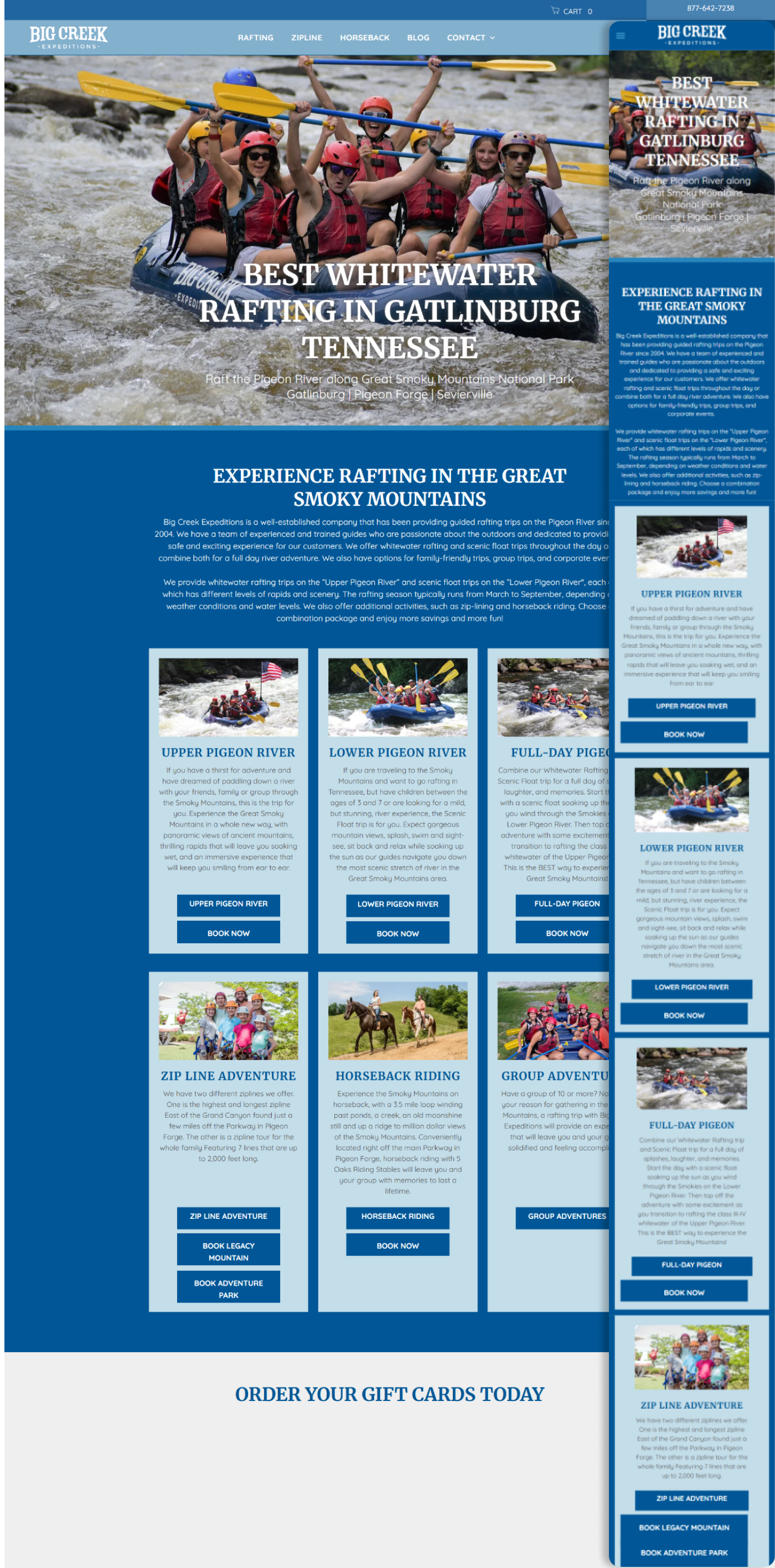
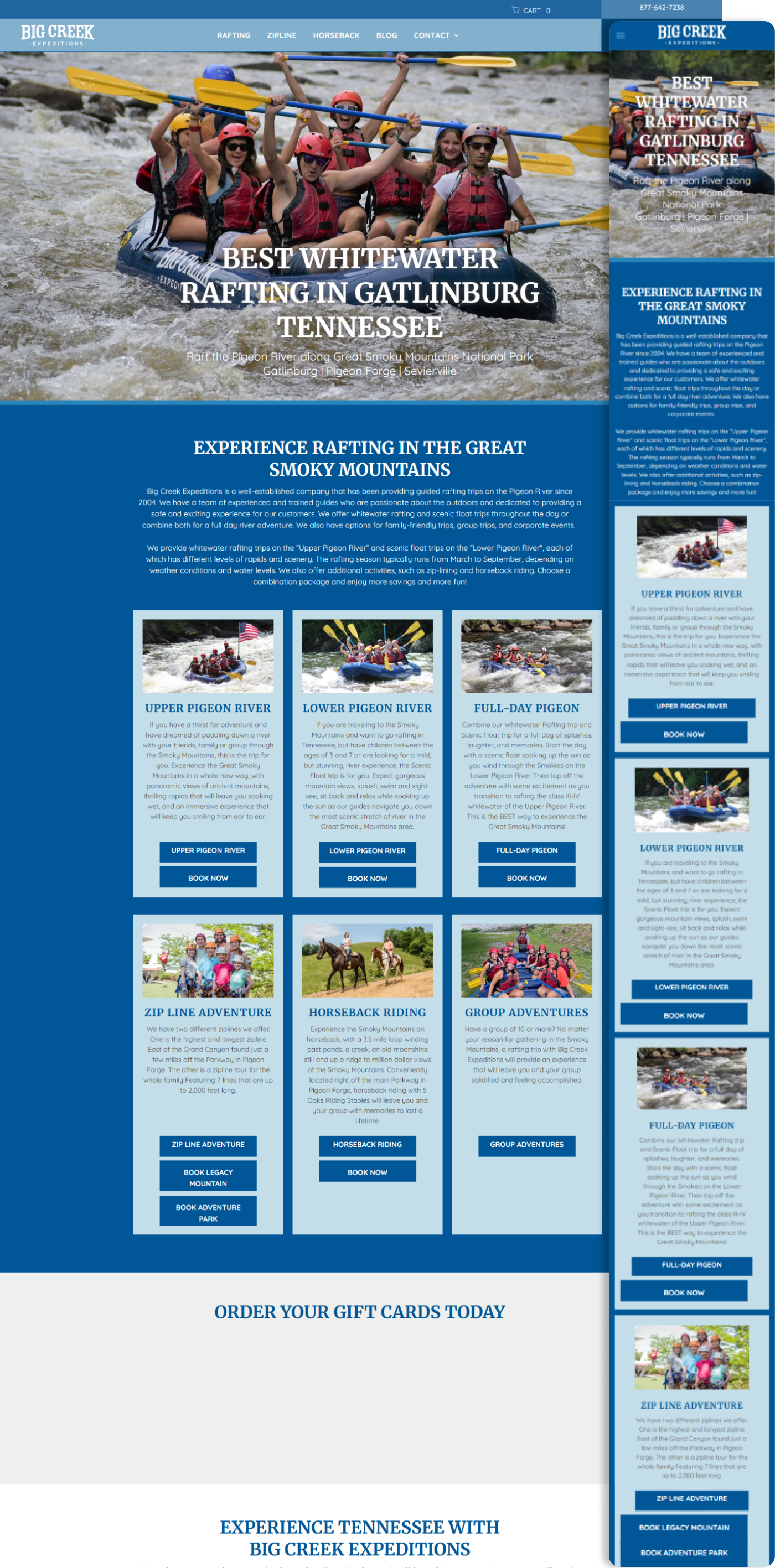
Homepage - Old Design
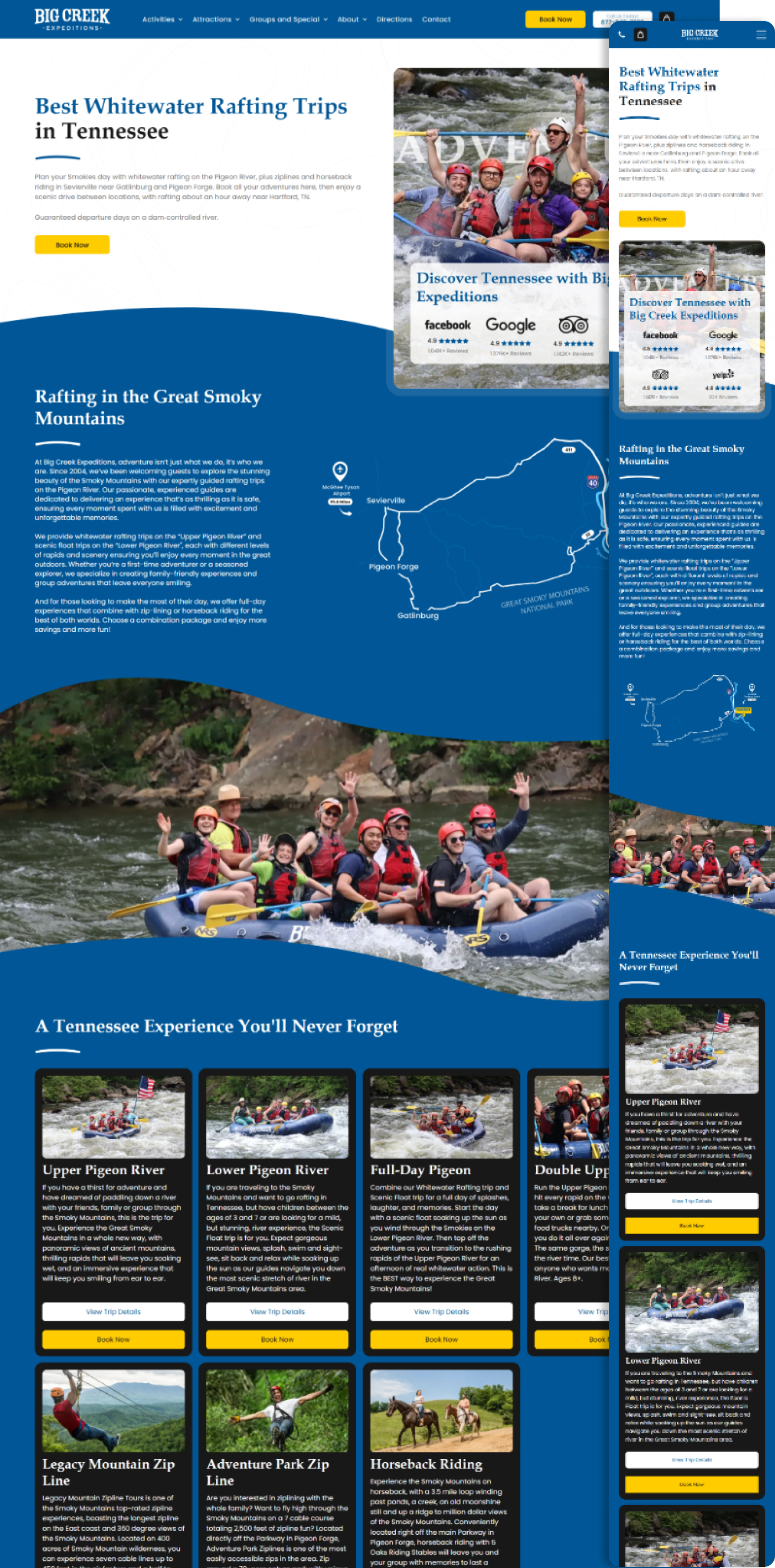
Homepage - New Design
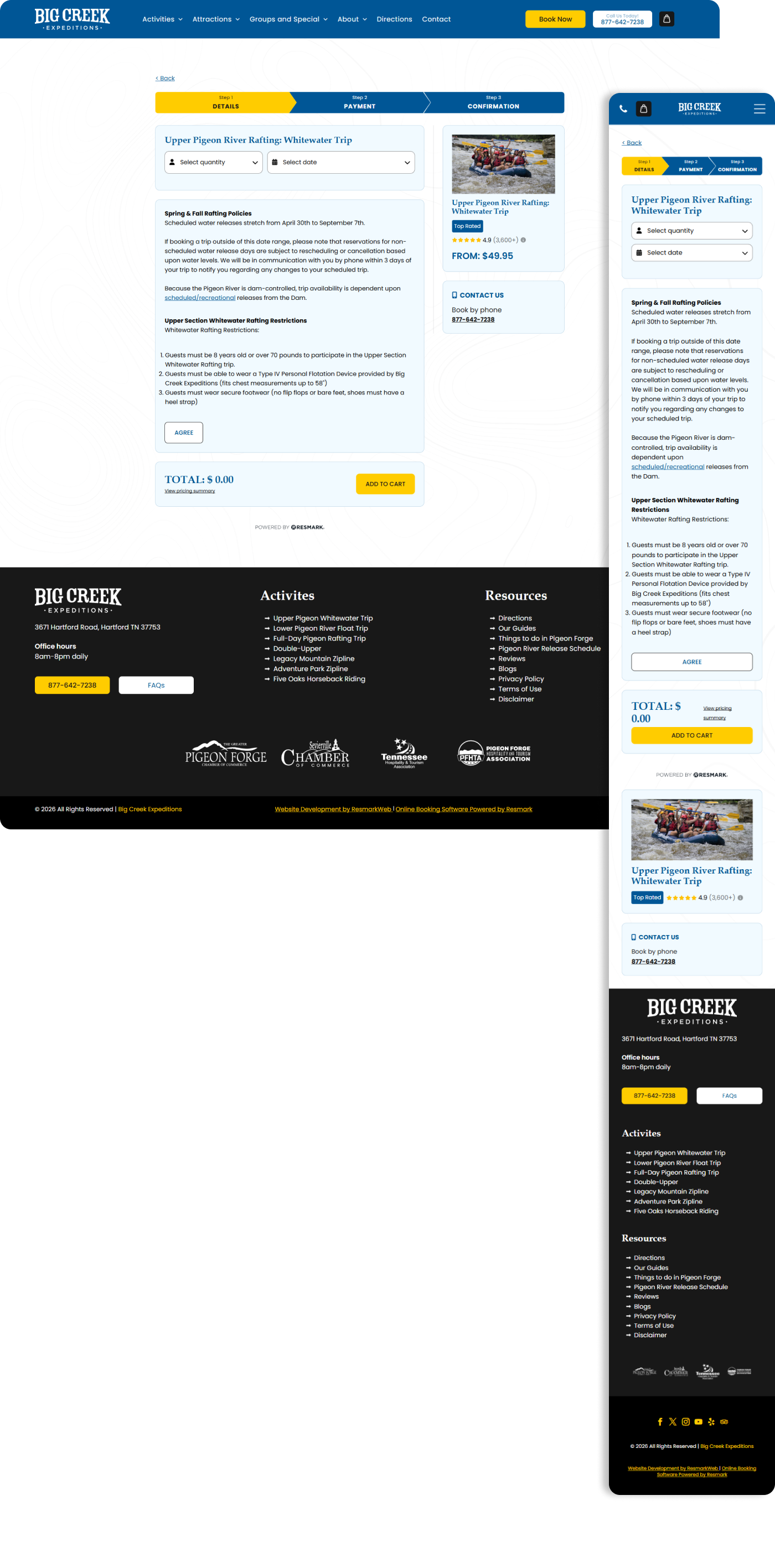
Product Page - Old Design
Product Page - New Design
Travel & Tourism Marketing Blog