Virgin Islands Ecotours | Case Study
Rankings turned into booked revenue
From Page-One Rankings to an AI-Cited Authority
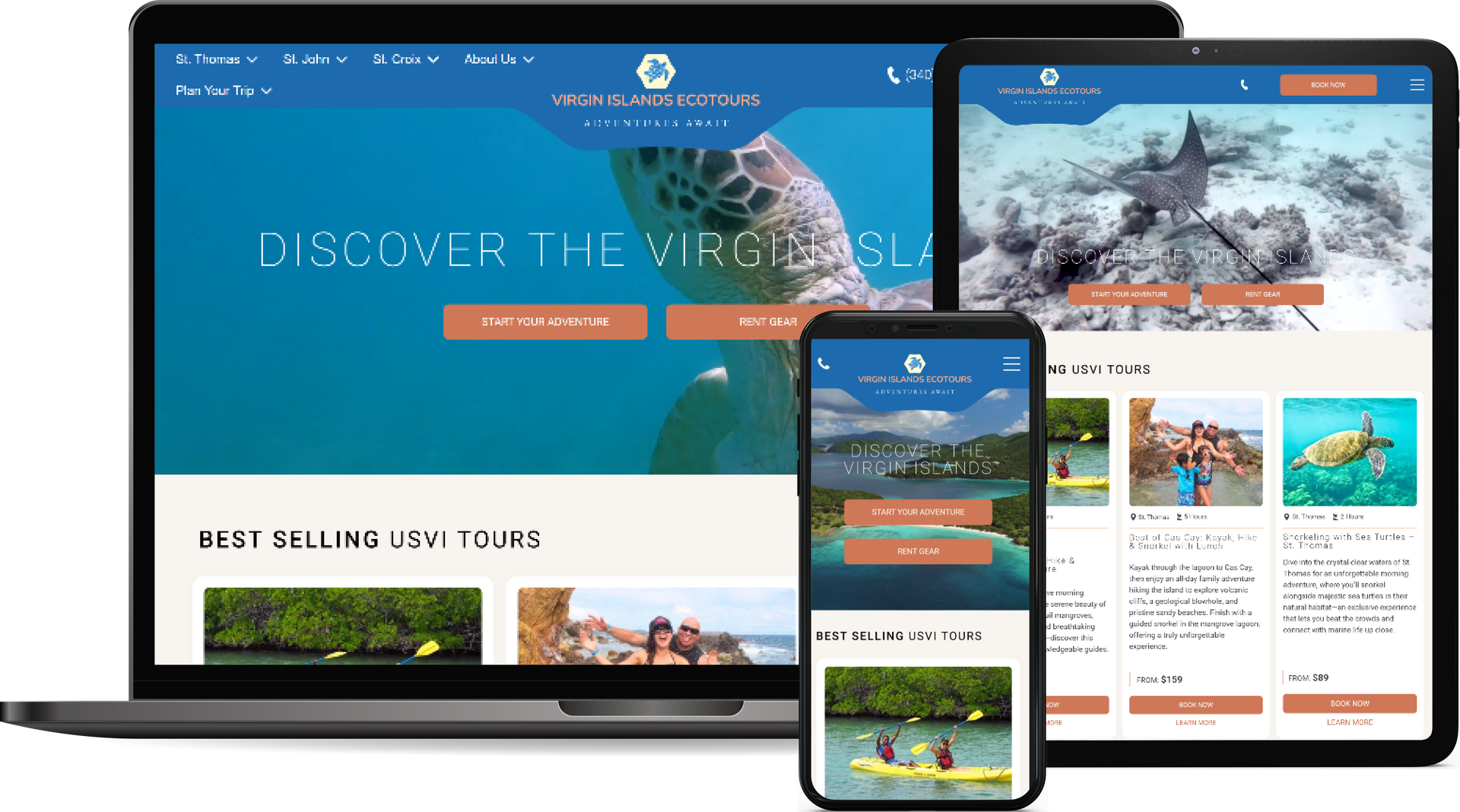
Virgin Islands Ecotours runs kayak, snorkel, and sea turtle tours across St. Thomas, St. John, and St. Croix, and its Google reviews read like a highlight reel: a 4.9-star average across more than 1,300 reviews on St. Thomas, with guests naming guides like Nash, Brooke, William, and Patrick often enough that “knowledgeable guide” shows up again and again. ResmarkWeb took over the account in April 2025 and ran an SEO, CRO, and local search program that turned a well-reviewed island brand into a business that shows up, and gets cited, everywhere its future guests are actually searching.
Featured Wins
+108% Revenue growth year over year — organic search channel
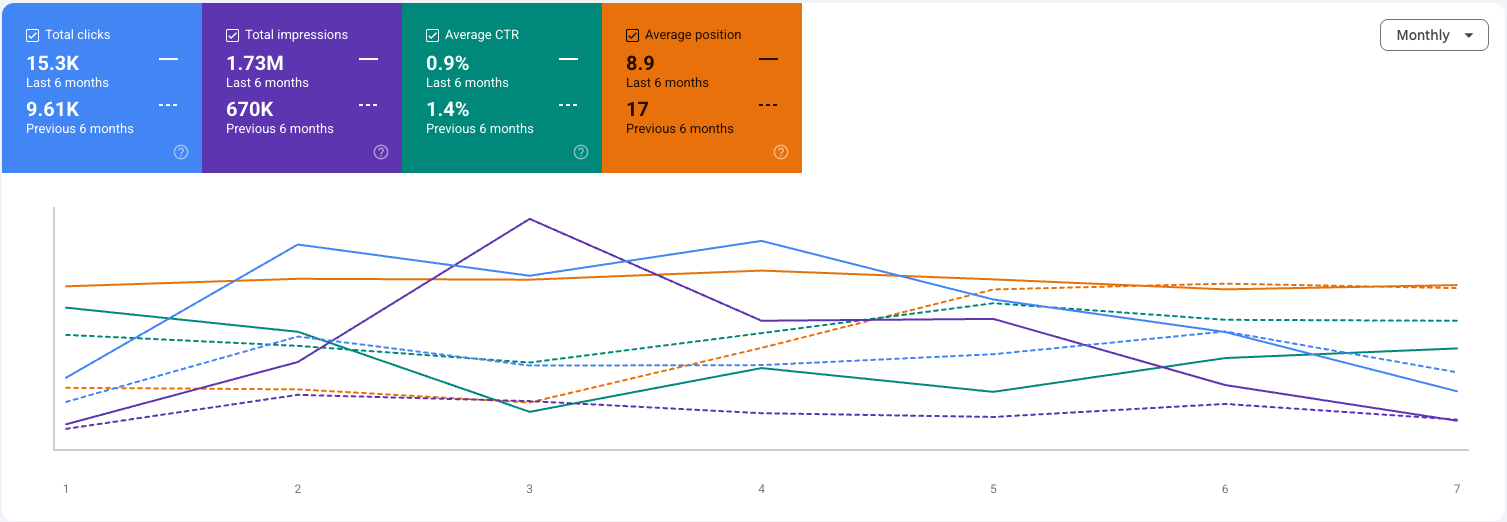
+150-158% Impression growth in Google Search Console — last 6 months vs. the prior 6 months
17 → 8.9 Average Google position — last 6 months vs. the prior 6 months
184 AI Overview citations earned — across target queries
The Situation
When ResmarkWeb took over the account in April 2025, VIE’s commercial tour pages were already ranking in the top 10 for several key queries, but that visibility wasn’t converting into bookings at the rate the business deserved. The site had also accumulated real technical debt: duplicate meta tags, duplicate content, broken internal links, 404 pages, and redirect loops were quietly diluting crawl budget and holding rankings back. Underneath both problems sat a structural one: VIE had expanded onto St. John in 2025 by acquiring a local competitor, folding a second business, and a second Google Business Profile, into its own online identity. That merger left local entity signals (NAP consistency, schema, listing accuracy) in worse shape than either business had on its own.
The plan was to stabilize the technical foundation first, then work through on-page SEO, internal linking, conversion optimization, structured data, local entity cleanup, and AI search visibility, in that order, across five phases over 15 months.
The Work
Phase 1: Foundation and Quick Wins (April–June 2025)
The campaign opened with a full technical cleanup, fixing duplicate meta tags, duplicate content, broken internal links, 404s, and redirect loops before any other optimization could take effect. A commercial opportunity audit flagged which pages sat closest to the first-page threshold, and internal linking was introduced for the first time, routing link equity from existing blog posts into the commercial tour pages that needed it most.
Phase 2: Visibility Recovery (July–September 2025)
A second technical pass caught newer issues, including duplicate H1 tags, while indexing was reviewed in Search Console to confirm priority pages were actually being crawled. Internal linking expanded to the top-performing pages, and three to five underperforming pages were reoptimized with refreshed content and new internal links. The quarter closed with a heatmap and engagement review of the lowest-converting tour pages, building a data-backed conversion plan for the next phase instead of guessing at fixes.
Phase 3: CTR, Schema, and Conversion Optimization (October–December 2025)
Title tags and meta descriptions were rewritten for the ten highest-impression, weakest-CTR pages, and FAQ schema went live on five commercial pages to make them eligible for rich results. The highest-revenue, lowest-engagement tour pages got above-the-fold redesigns (tour descriptions moved up, star ratings made clickable and linked to testimonials) plus new CTA blocks further down the page. With too much organic traffic concentrated on a single blog post, December’s work went into diversifying entry points and routing more of that traffic toward bookable tours. By year’s end, organic sessions were up 36.6% and engaged sessions were up 43.6% quarter over quarter.
Phase 4: Structural Depth and Content Expansion (January–March 2026)
January validated the Q4 CRO changes against fresh behavioral data rather than rolling out more updates blind. February extended schema well past FAQ markup, adding Product/Offer schema to tour and rental pages and Review schema to surface testimonial trust signals. March closed a content gap audit on high-intent commercial pages and replaced a generic “Recommended Tours” block on every blog post with tour recommendations matched to each article’s specific topic.
Phase 5: Local Entity and AI Overview Authority (April–June 2026)
April’s local entity audit, benchmarking VIE against its top St. John competitors, surfaced a business entity coherence score of just 59 out of 100, with NAP consistency at 25/100 and schema alignment at 15/100, the direct legacy of the 2025 acquisition merging two business identities into one. May put a review acquisition and citation cleanup plan in place across TripAdvisor, Yelp, Bing Places, Apple Maps, and other directories to close that gap. June restructured VIE’s strongest informational content, clear H2 questions, short direct answers, FAQ sections, specifically for AI Overview extraction, which is where the bulk of the campaign’s 184 AI citations came from.
The Results
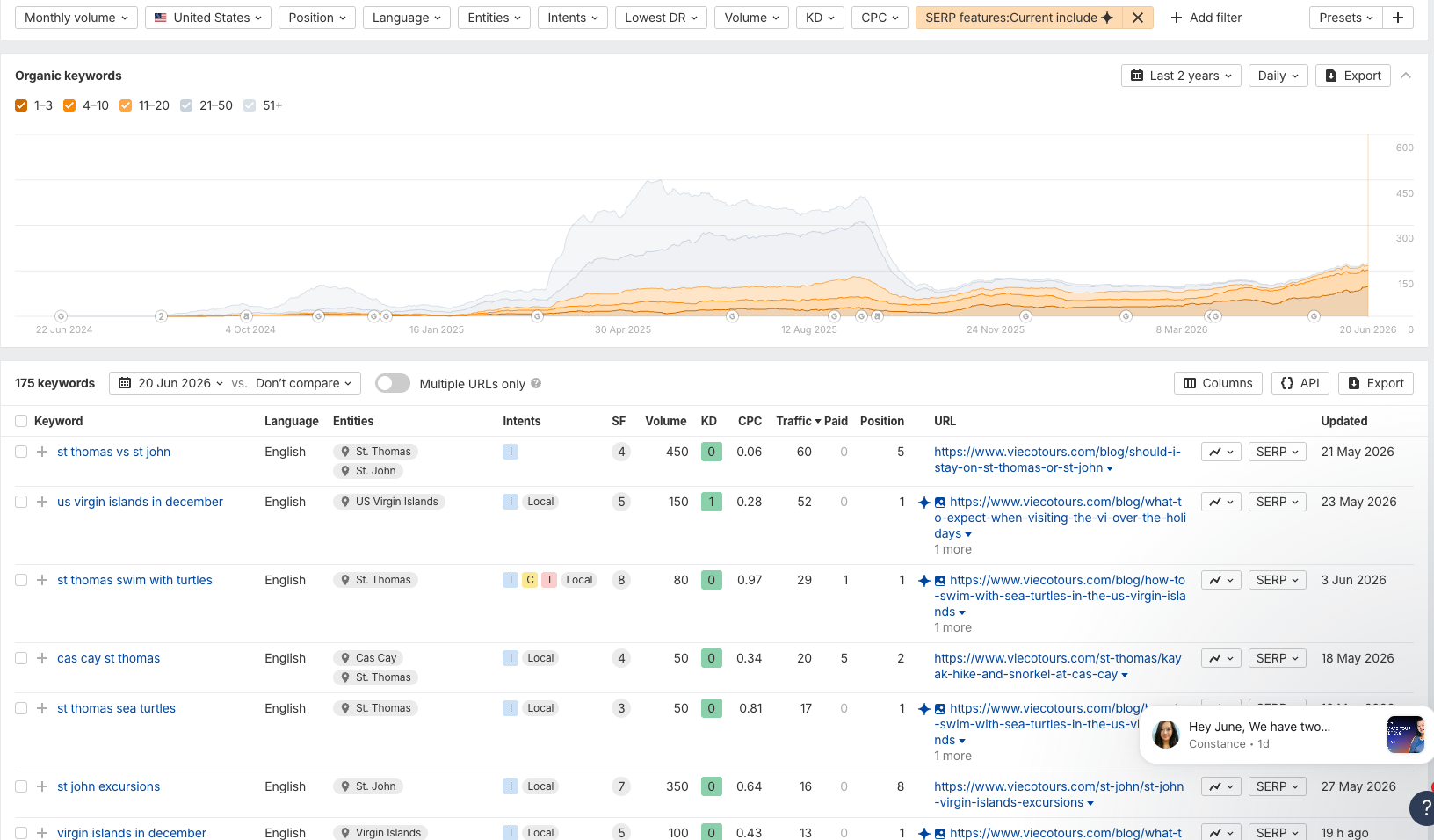
Impressions grew because VIE started ranking for far more of what people actually search. Technical cleanup removed the indexation blockers that were suppressing pages, metadata rewrites lifted click-through on already-visible pages, and schema markup opened the door to rich results. Comparing the last six months to the six months before that, Google Search Console impressions are up in the range of 150-158%, and average position improved from 17 to 8.9, the difference between the bottom of page two and the top of page one.
Those rankings are landing on the searches that actually lead to a booking, not just broad traffic. VIE currently holds position 1 for “us virgin islands in december,” “st thomas swim with turtles,” and “st thomas sea turtles,” and position 2 for “cas cay st thomas,” all mapped to real tour and blog pages rather than vanity keywords. That’s the kind of ranking that shows up in bookings, not just traffic reports.
Revenue grew because better-targeted traffic met a site that converted more of it. The above-the-fold and mid-page CRO work cut drop-off on VIE’s highest-revenue tour pages, sharper metadata pulled in higher-intent clicks, and the reworked blog-to-tour internal linking turned more blog readers into tour page visitors. Organic search revenue is up 108% year over year.
AI Overview citations came from four things compounding together: 15 months of consistent content work building topical authority, the Phase 4 schema expansion giving Google machine-readable trust signals, the Phase 5 entity coherence and citation cleanup, and content deliberately restructured in June 2026 to match how AI Overviews extract answers. VIE now shows up in 184 AI Overview citations across its target queries.
The most recent monthly reporting cycle backs up the trend. In May 2026 versus May 2025, GA4-tracked online revenue was up 108.3% ($15,199 to $31,656), average Google position improved from 24.0 to 10.1, and Google Ads returned 659% ROAS. The St. Thomas Google Business Profile has grown past 1,300 reviews at a 4.9-star average.
Key Takeaways for Tour Operators
1. Fix the technical foundation before you build on top of it. Every phase of this campaign started with a technical pass; skipping that step would have capped everything built afterward.
2. Internal linking isn’t a one-time project. It should be an active work in every single phase, moving authority and users toward the pages that book trips.
3. Run CRO alongside SEO, not after it. Rankings without a site built to convert them just produce more visitors who leave.
4. Refresh what’s already indexed before publishing something new. Revisiting and relinking existing content, rather than only adding new URLs, is a big part of how this campaign earned 184 AI Overview citations in 15 months.
Ready to Turn Rankings Into Revenue?
Virgin Islands Ecotours had the reputation and the tour pages already ranking. What it needed was a program that fixed the technical foundation, turned visibility into bookings, and positioned the brand for how people search today, including inside AI Overviews.
ResmarkWeb helps tour and activity operators close that same gap: whatever is standing between your current rankings and booked trips, whether that’s technical debt, a conversion problem, or a site that’s invisible to AI search.
Travel & Tourism Marketing Blog